Epoxy Floor Coatings
- Diamond grinding to open the concrete so the coating actually bonds — no acid etch
- Moisture test on the slab before any coating goes down
- Cracks, pits, and control joints filled and leveled
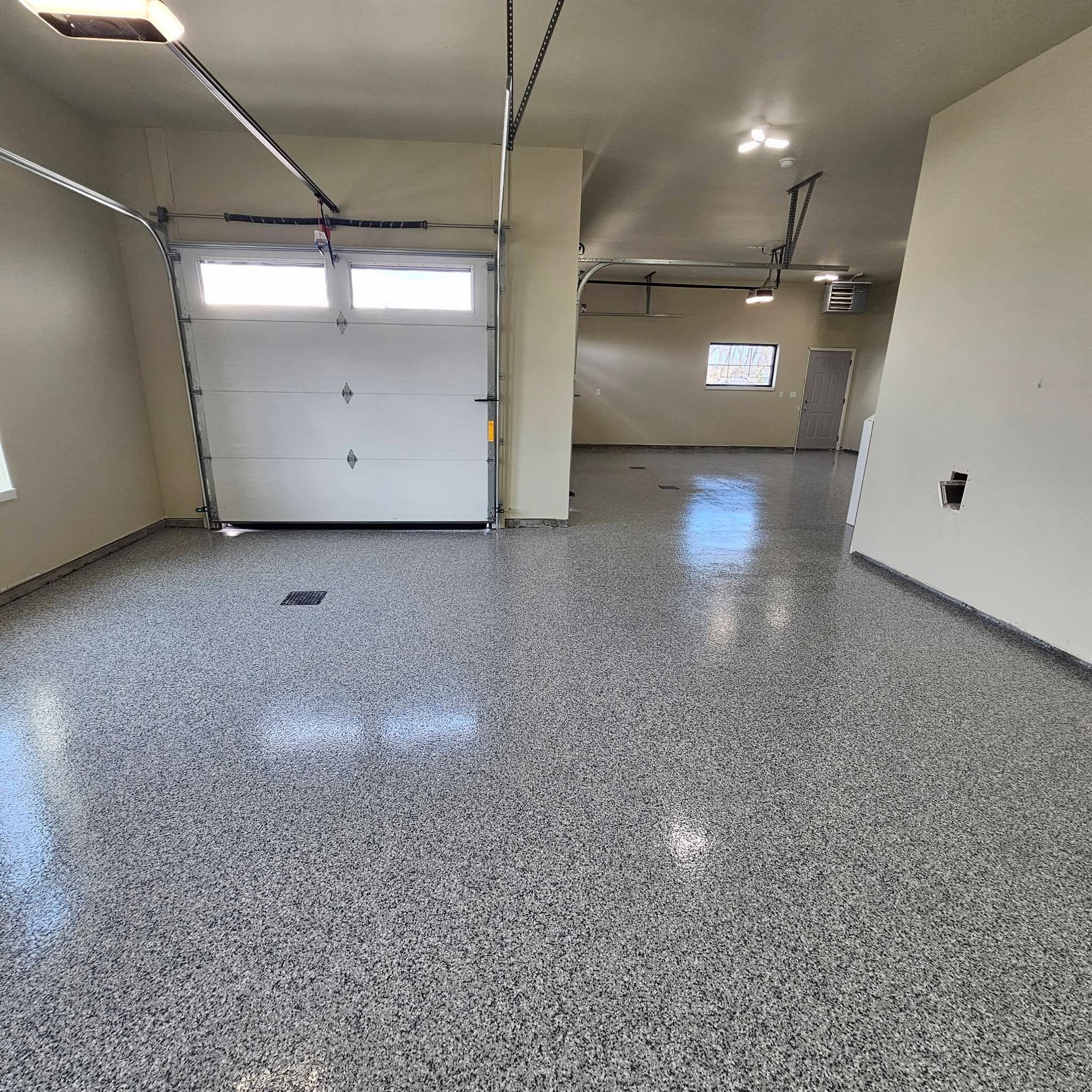
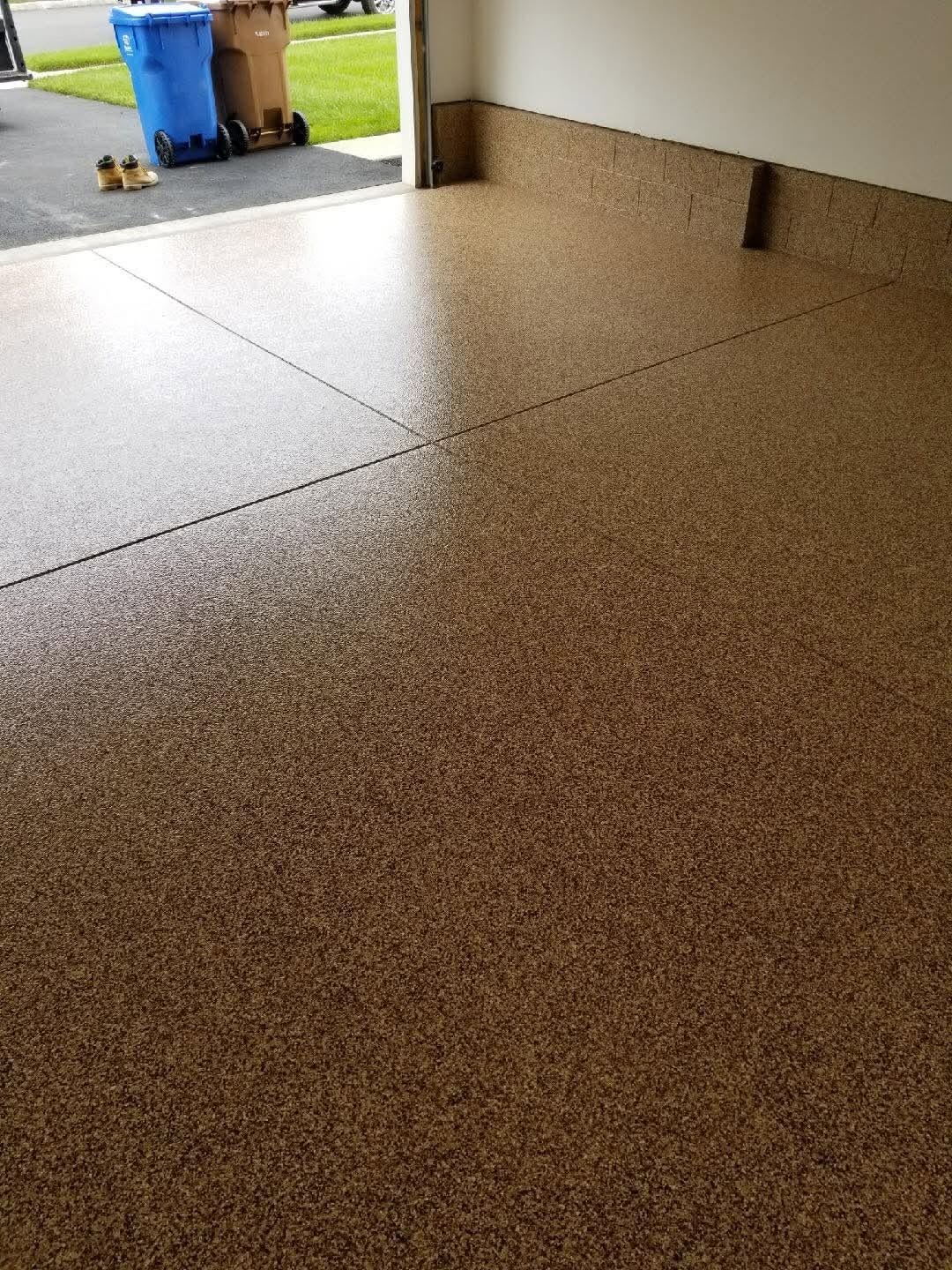
- Pigmented epoxy base coat with broadcast vinyl flake for grip and looks
- Polyaspartic topcoat for hot-tire, salt, oil, and abrasion resistance
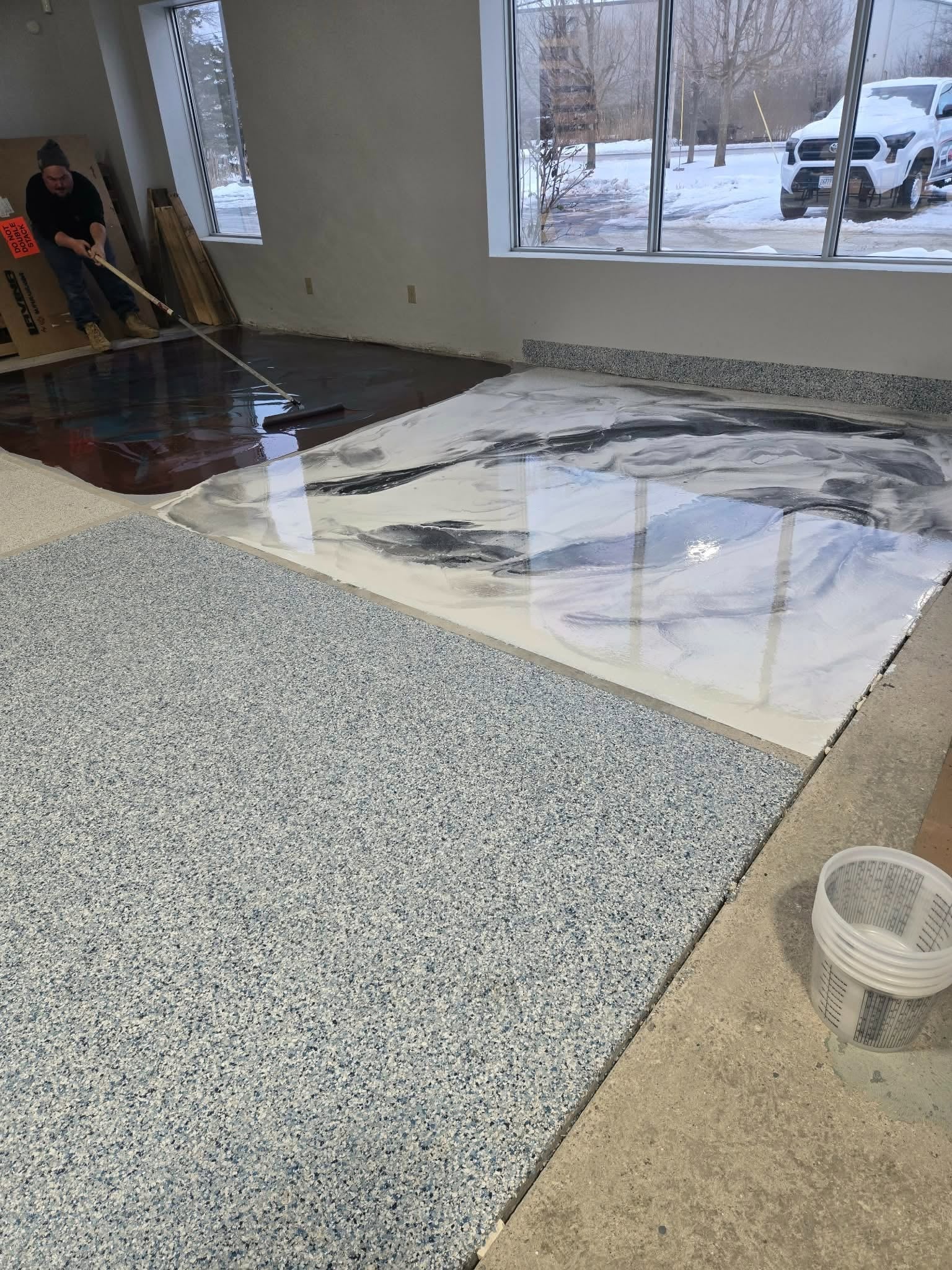
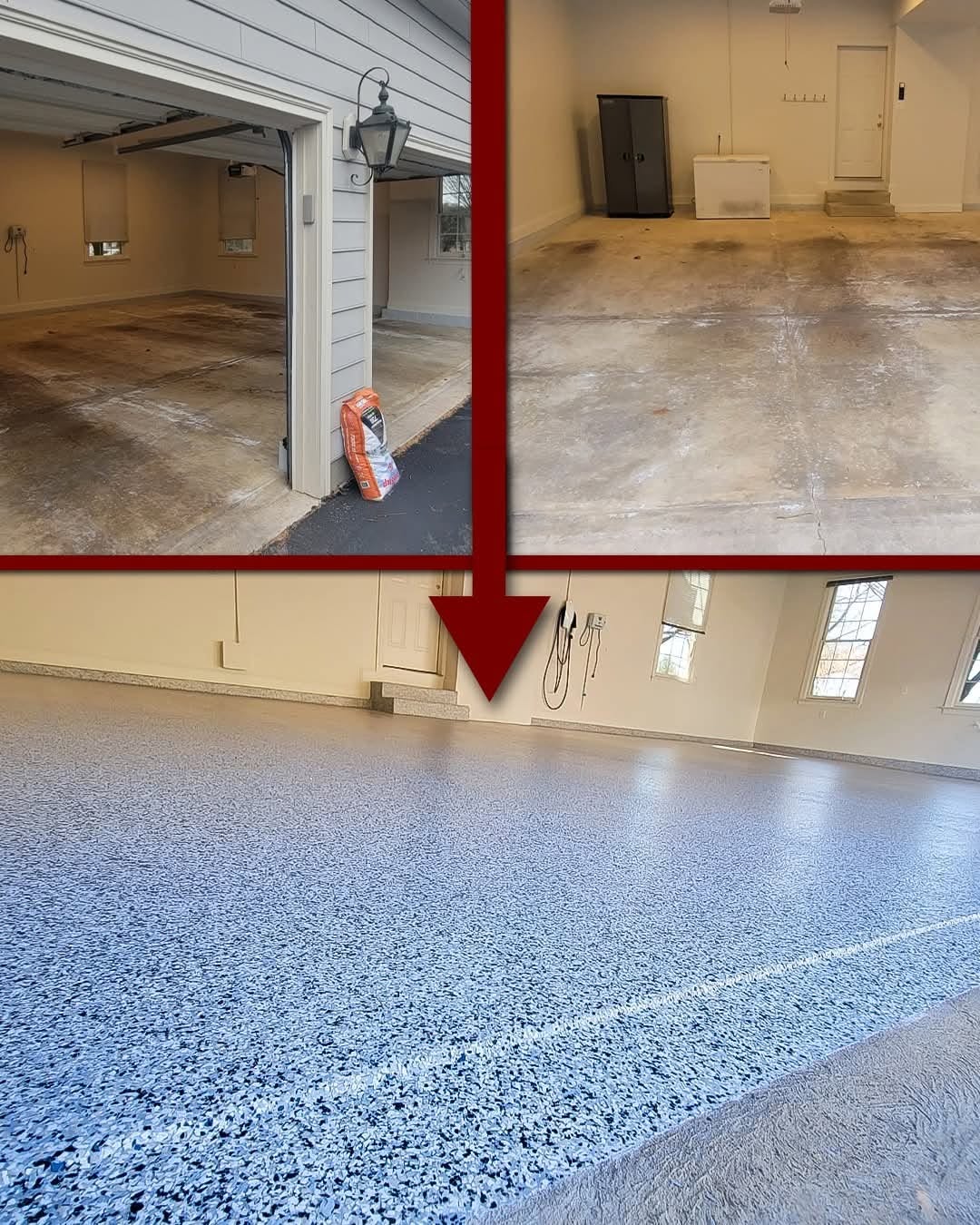
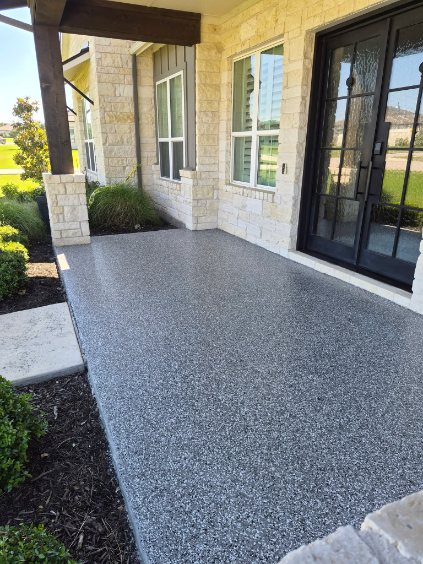
Most epoxy floors fail for one reason: prep. The cheap version — acid etch and a single roll-on coat — bonds to the surface dust on top of the concrete, not the concrete itself. Drive on it through one upstate New York winter, with hot tires and road salt working on it, and it peels in sheets. Doing it right starts below the coating.
Monroe Hardwood Flooring grinds the slab with a diamond grinder to open the pores and give the epoxy a mechanical profile to grip. On basements especially, Chris moisture-tests the slab first — concrete that's pulling moisture from below will lift any coating that isn't put down with a moisture-mitigating primer, and there's no way to know without testing. Cracks, pits, and control joints get filled and leveled so the floor reads as one clean surface.
“A coating is only as good as the prep under it. Acid-etch kits bond to dust and peel. We grind the concrete so the epoxy holds for good.”
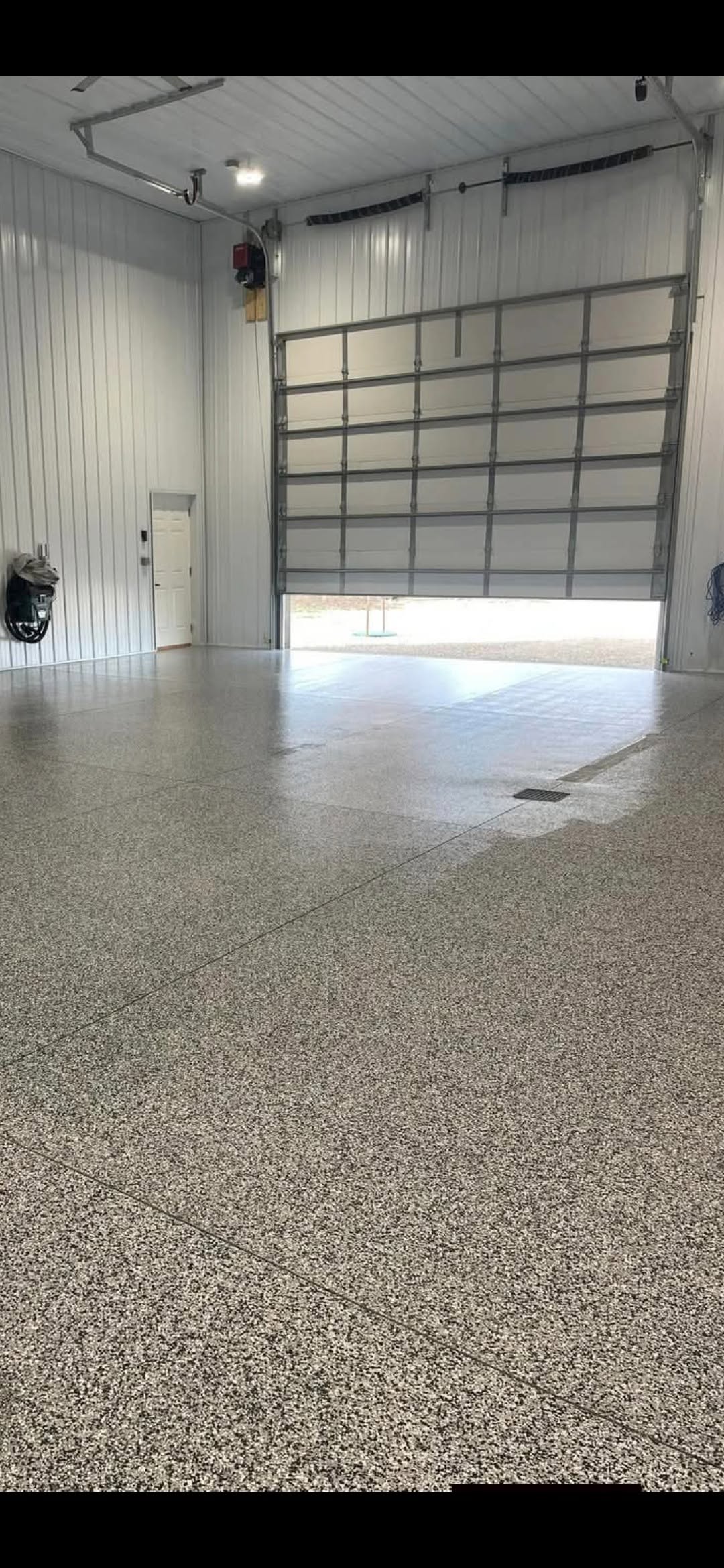
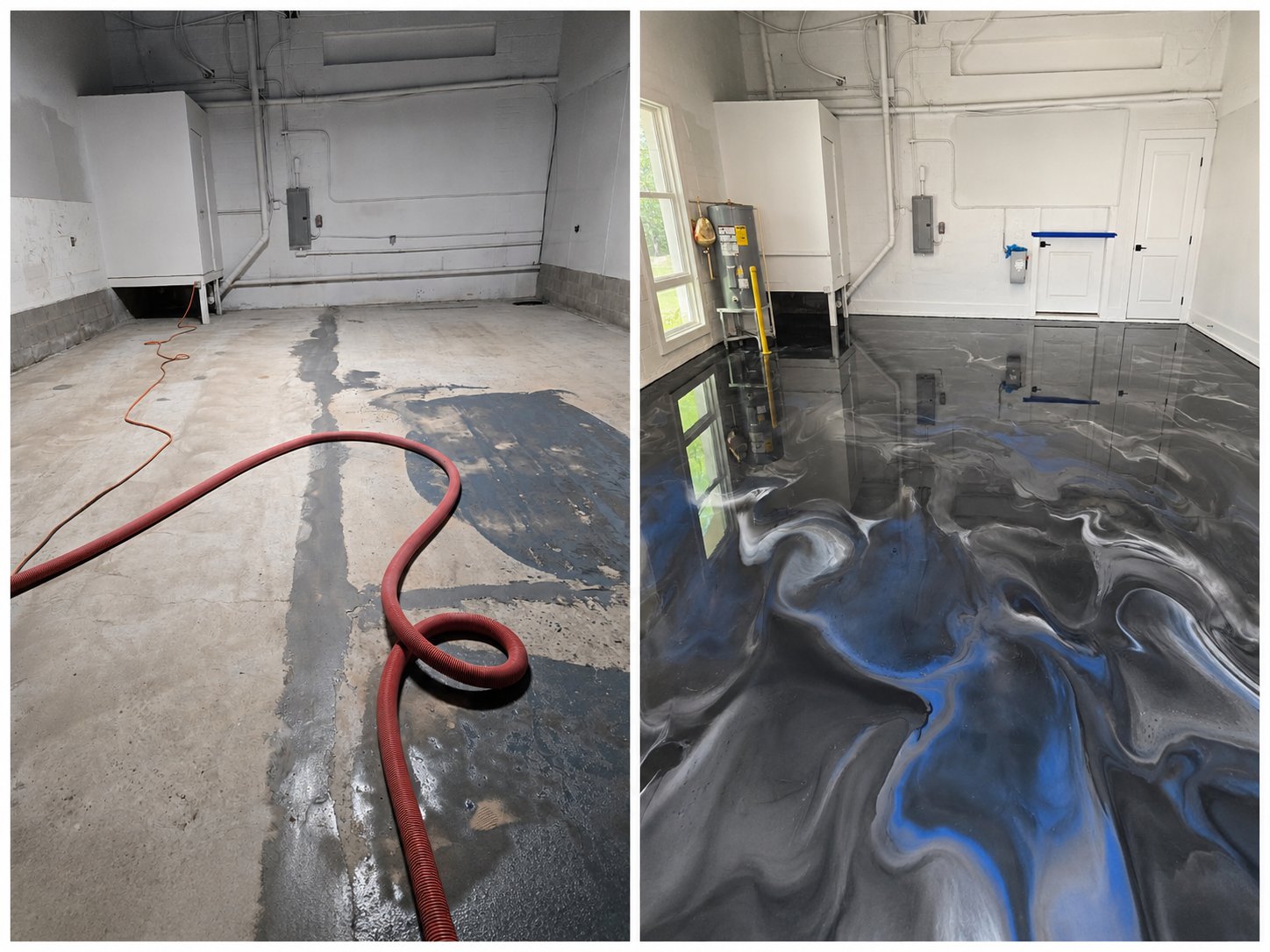
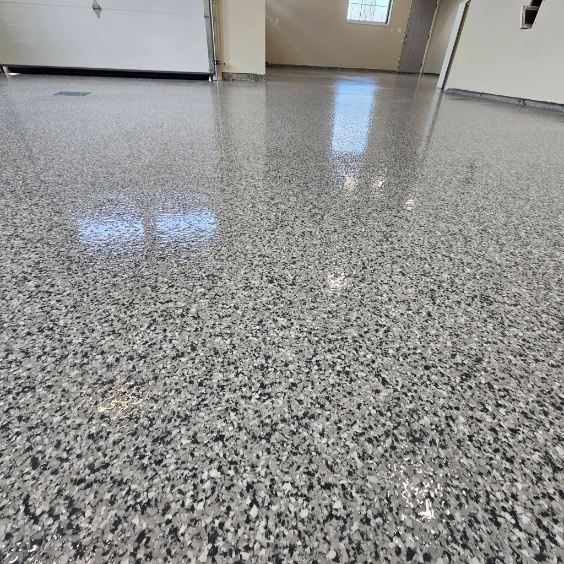
Then we build the system. A pigmented epoxy base coat goes down, vinyl flake is broadcast into it for grip and to hide minor slab imperfections, and the whole thing is sealed with a polyaspartic topcoat. That topcoat is what makes it last: it resists hot-tire pickup, oil, road salt, household chemicals, and abrasion, and it won't yellow. You get a floor that wipes clean instead of staining, and brightens up a dark garage or basement instead of swallowing the light.
Garages and basements need slightly different approaches — garages get the heavy-duty topcoat for vehicle traffic, basements get the moisture attention — but the foundation is the same: grind, test, repair, coat. Same as every job, Chris handles the estimate himself and gives you a written quote that breaks out prep, materials, and labor, so you can see exactly what you're paying for.
Related services we handle on the same job.
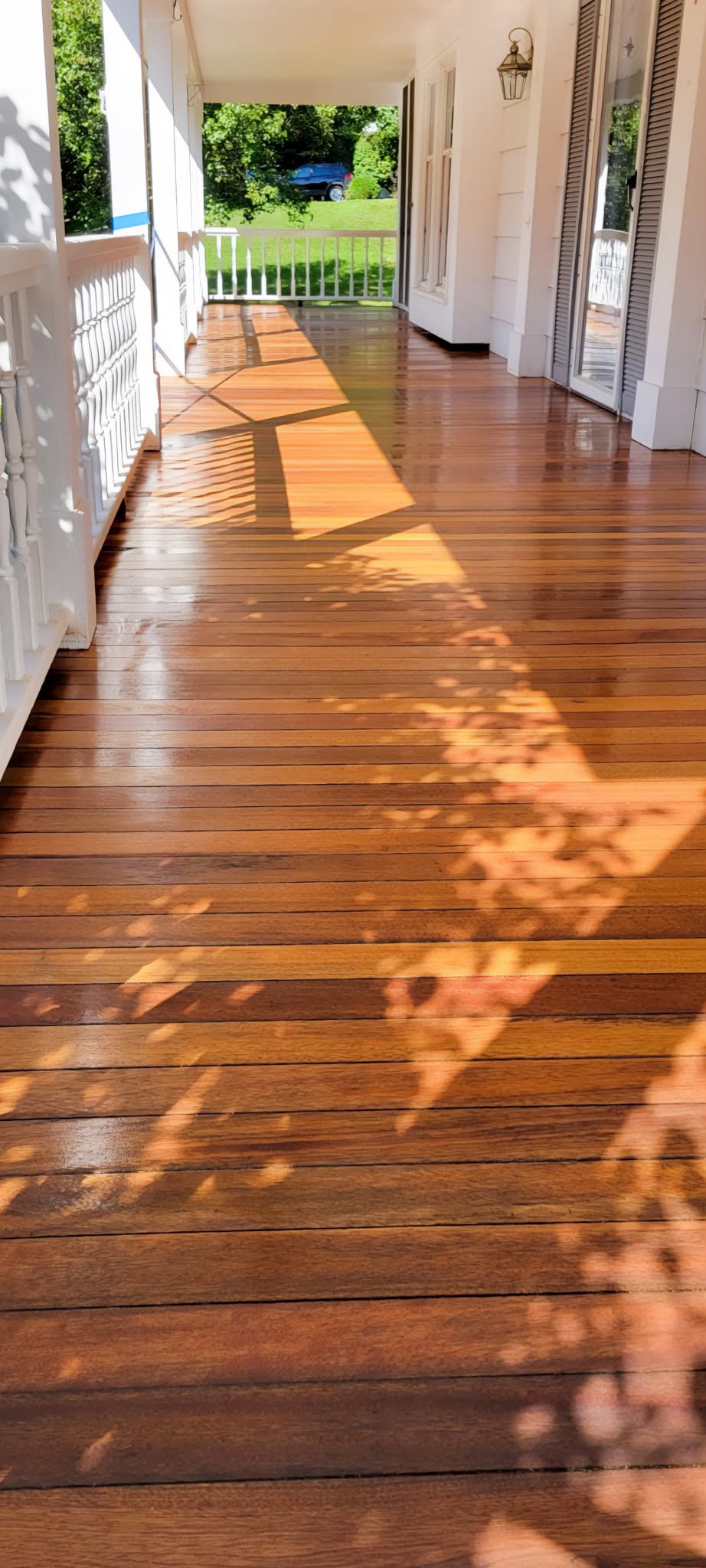
Hardwood Floor Installation
Solid and engineered hardwood installation with proper acclimation and subfloor prep.
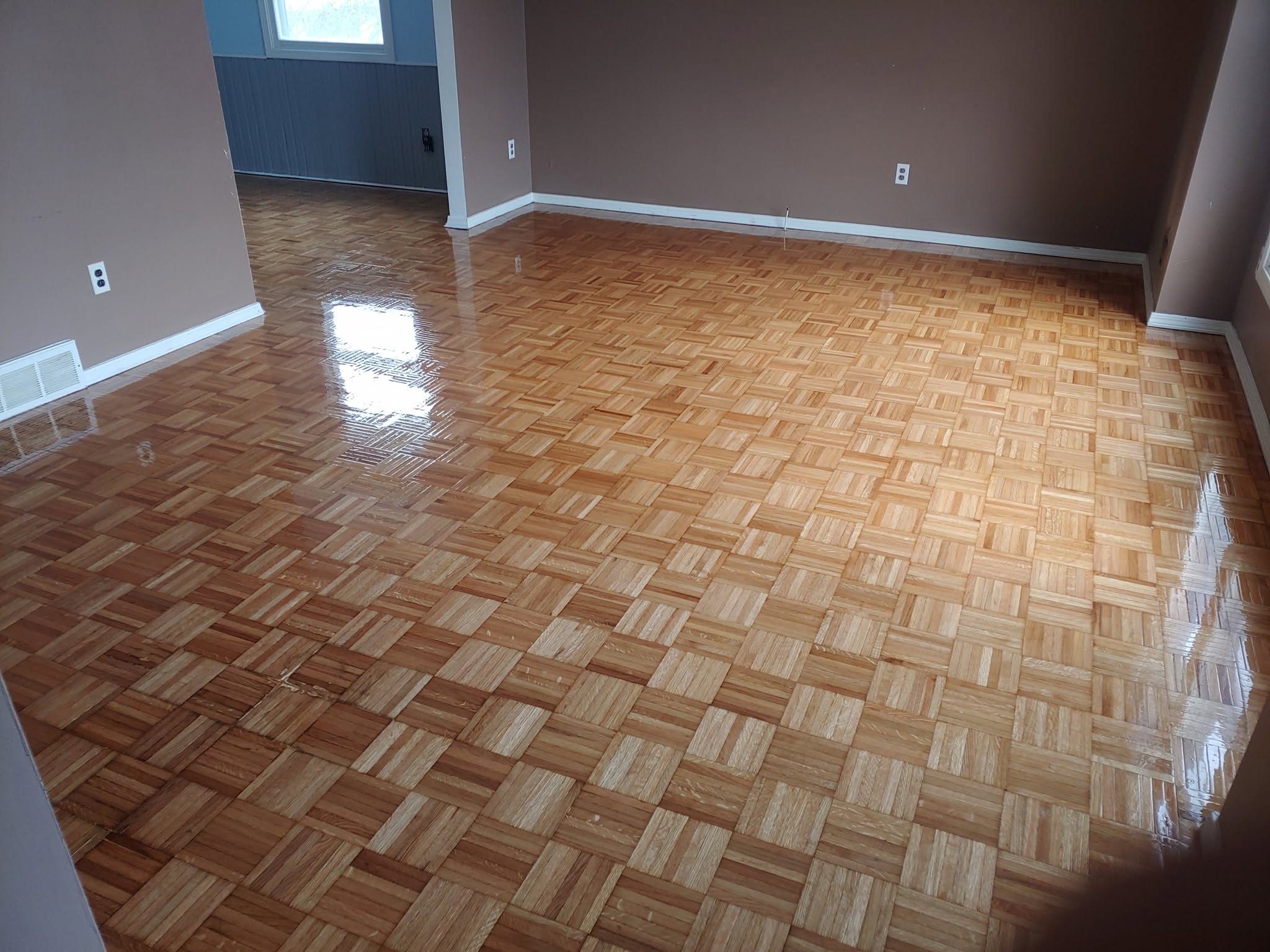
Hardwood Floor Refinishing
Sanding and refinishing existing hardwood with stain options and poly topcoats.

Luxury Vinyl Plank Installation
Waterproof LVP and LVT installation for basements, kitchens, and bathrooms.